
Italian and Spanish Leaders Disagree on Migration Policy at EU Summit
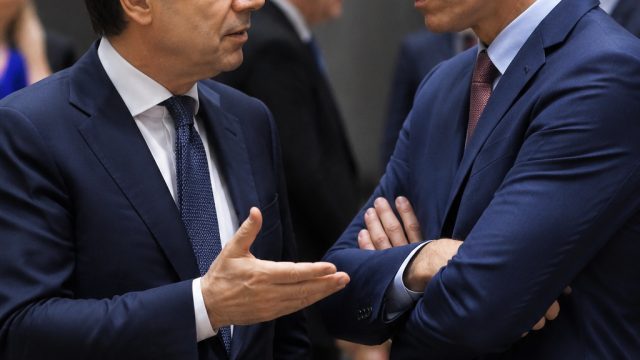
The recent European Union summit witnessed a significant clash between the leaders of Italy and Spain as they publicly debated the pressing issue of migration. Italian Prime Minister Giorgia Meloni and Spanish Prime Minister Pedro Sanchez engaged in a spirited discussion over their countries' differing approaches to handling migrant inflows, underscoring the enduring tensions within the EU regarding this contentious topic.
Context of the Debate
Migratory pressures have increasingly become a focal point for EU member states, particularly those situated along the Mediterranean. The influx of migrants, many seeking refuge from conflict and economic hardship, has posed challenges that require coordinated responses from the bloc. The contrasting positions of Meloni and Sanchez exemplify the complexities of achieving a unified strategy.
The Italian Perspective
Prime Minister Giorgia Meloni has taken a hardline stance on migration, advocating for stricter border controls and a more robust approach to deter illegal crossings. During the summit, she emphasized that Italy, as one of the primary entry points for migrants, bears a disproportionate burden and called for more substantial assistance from the EU to manage these challenges.
The Spanish Approach
In contrast, Pedro Sanchez has promoted a more humanitarian approach. He argued that addressing the root causes of migration, such as poverty and violence in origin countries, is essential. Sanchez highlighted Spain's commitment to solidarity, stating that collaborative efforts across EU nations are vital for effective migration management.
The Significance of Their Disagreement
The public debate between Meloni and Sanchez is not just a reflection of their national policies; it also raises critical questions about the future of EU unity in migration matters. With rising euroscepticism and varying political climates across member states, the prospect of a cohesive EU migration policy appears increasingly elusive.
Implications for the EU
- Policy Fragmentation: The divergence in strategies indicates a growing rift that could lead to fragmented policies within the EU, complicating efforts to establish a unified migration framework.
- Public Sentiment: These differences are likely to resonate with citizens, influencing public opinion and potentially impacting future elections in both countries.
- Regional Stability: For countries along the Mediterranean, the handling of migration directly affects regional stability and relations with non-EU nations.
What Happens Next?
The debate between Meloni and Sanchez is expected to continue as the EU grapples with the evolving migration landscape. Future summits will necessitate compromises and innovative solutions to bridge the gap between differing national interests. The stakes are high, and the need for an effective response to migration challenges has never been more pressing.
The Role of Digital Technology
In today’s digital age, the use of technology plays a crucial role in managing migration. Data analytics and real-time information sharing can enhance border security and improve the efficacy of humanitarian responses. As both leaders navigate their countries' strategies, leveraging technology will be essential in crafting solutions that cater to the evolving needs of migrants.
Conclusion
The interaction between Giorgia Meloni and Pedro Sanchez at the EU summit serves as a microcosm of the broader challenges facing the European Union regarding migration. Their conflicting viewpoints highlight the need for a collaborative approach that balances security with humane treatment of migrants. As migration issues remain a priority, the EU's ability to unify in response will determine the future of its member states and the well-being of countless individuals seeking better lives.