
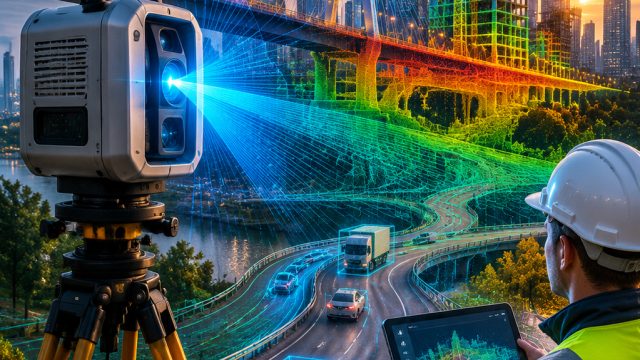
The rapid evolution of technology today is marked by significant advancements in automation and sensing technologies, particularly Light Detection and Ranging (LiDAR). As industries increasingly adopt intelligent mobility solutions, understanding the dynamics of the LiDAR market has never been more crucial for investors and business leaders alike. This article delves into the latest trends in LiDAR technology and their implications for various sectors.
The Growing Importance of LiDAR in Automation
LiDAR technology is pivotal in enhancing automation across multiple industries. By providing precise measurements and detailed 3D maps, LiDAR systems have become essential tools in various applications, including autonomous vehicles, agriculture, and urban planning. The ongoing transition to automated solutions highlights the necessity of LiDAR technology as a foundational component of modern innovation.
Applications of LiDAR in Key Industries
- Autonomous Vehicles: LiDAR systems are integral for self-driving cars, enabling them to navigate complex environments by detecting obstacles and understanding spatial relationships.
- Agriculture: Farmers are utilizing LiDAR for precision farming, optimizing field management, crop analysis, and irrigation planning.
- Urban Planning: City planners employ LiDAR to create accurate 3D models of urban landscapes, facilitating better infrastructure development and environmental assessments.
Current Market Trends Impacting LiDAR Adoption
The LiDAR market is experiencing transformative growth driven by several key trends. Understanding these trends can provide valuable insights for businesses looking to leverage this technology.
1. Increased Investment in R&D
As industries recognize the potential of LiDAR, investment in research and development has surged. Companies are focusing on improving sensor capabilities, reducing costs, and enhancing data processing speeds. This trend is likely to continue, fostering innovation and driving down prices, making LiDAR more accessible.
2. Integration with AI and Machine Learning
LiDAR technology is increasingly being paired with artificial intelligence (AI) and machine learning algorithms. This integration allows for more sophisticated data analysis, enabling industries to extract actionable insights from the detailed spatial data provided by LiDAR. The combination of these technologies is reshaping how industries approach problem-solving.
3. Expansion of 5G Networks
The rollout of 5G networks is expected to enhance the functionalities of LiDAR systems significantly. With faster data transfer rates and lower latency, real-time data processing becomes more viable, which is critical for applications such as autonomous driving and live urban monitoring.
Challenges and Considerations for Investors
While the future of LiDAR technology appears robust, there are challenges that investors should keep in mind.
1. Competitive Landscape
The LiDAR market is becoming increasingly competitive, with numerous startups and established companies vying for market share. Investors must conduct thorough due diligence to identify which companies are best positioned to capitalize on the growth of this technology.
2. Regulatory and Safety Concerns
As with any emerging technology, regulatory hurdles remain a concern. Ensuring the safety and accuracy of LiDAR systems, especially in critical applications such as autonomous vehicles, is paramount. Investors should stay informed about the regulatory landscape and its potential impact on market growth.
Conclusion: Stay Informed to Stay Ahead
As we move deeper into the era of intelligent automation and advanced sensing systems, the role of LiDAR technology will only grow. For investors and industry leaders, staying informed about current trends and advancements is essential to harnessing the full potential of this transformative technology. By understanding the evolving landscape, businesses can better position themselves to leverage LiDAR's capabilities, ensuring that they remain competitive in a rapidly changing world.